Anissa R. Lewis
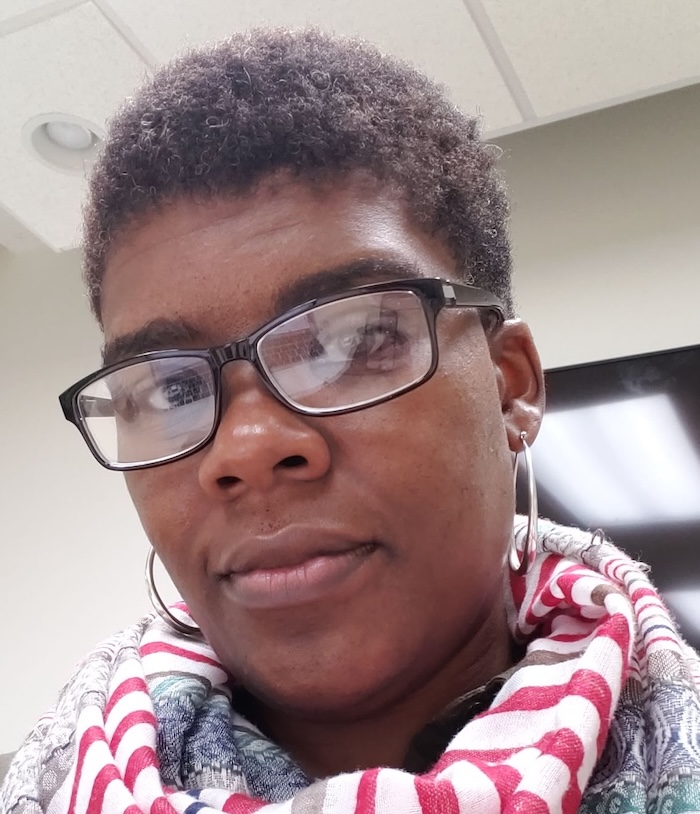
Anissa R. Lewis, a community-based artist, was born and raised in Covington, KY by way of Philadelphia, PA—where she relocated after receiving her MFA from Yale School of Art. Lewis’ deep belief in the power of community, identity and voice has led her to many projects and collaborations. Some include an arts-based women empowerment classes for a Philadelphia County prison drug and alcohol abuse unit; a rite of passage program for teenage black and brown girls; collecting oral stories from longtime residents about their connections to their neighborhoods; and, interactive and community-led installations and murals.
Lewis’ work focuses on the power of place in her hometown neighborhood. Her photo-based prints, love letter yard signs and video seek to reconcile her memories of childhood with the present-day neighborhood’s changing social fabric, identity and architecture of homes still present and those lost.
Lewis also facilitates community building workshops and gives talks on community, story and voice as it relates to place and the historically marginalized. Her work has shown nationally at the Contemporary Arts Center, in Cincinnati, OH, the Kemper Museum of Contemporary Art, the Kansas African American Museum, Hampton Museum, Hampton, VA, Governor’s Island, NYC, NY and MOCA-Connecticut. She has appeared on the podcast, “I LIKE YOUR WORK.” She has taught classes in social practice, community arts and print at University of Cincinnati DAAP and the Art Academy of Cincinnati. She has appeared on the podcast, “I like your work,” and was featured in Cincinnati Magazine. She has had residencies at Residency Unlimited in Brooklyn, NY, The Peacock, in Aberdeen, Scotland (funded by the Great Meadows Foundation) and the Vermont Studio Center, in Burlington, VT.. Her work has been viewed at the Hampton University Museum, in Hampton, VA, the Kemper Museum of Art in Kansas City, MO, the Weston Art Gallery and Contemporary Center for Arts, in Cincinnati, OH, the Riffe Gallery, in Columbus, OH, Governor’s Island, in NYC, NY and MOCA-Connecticut. Her work can be found in the Sara Vance Waddell Collection.
She lives in her childhood home in Covington, KY with her partner and son.
Select works by Anissa R. Lewis
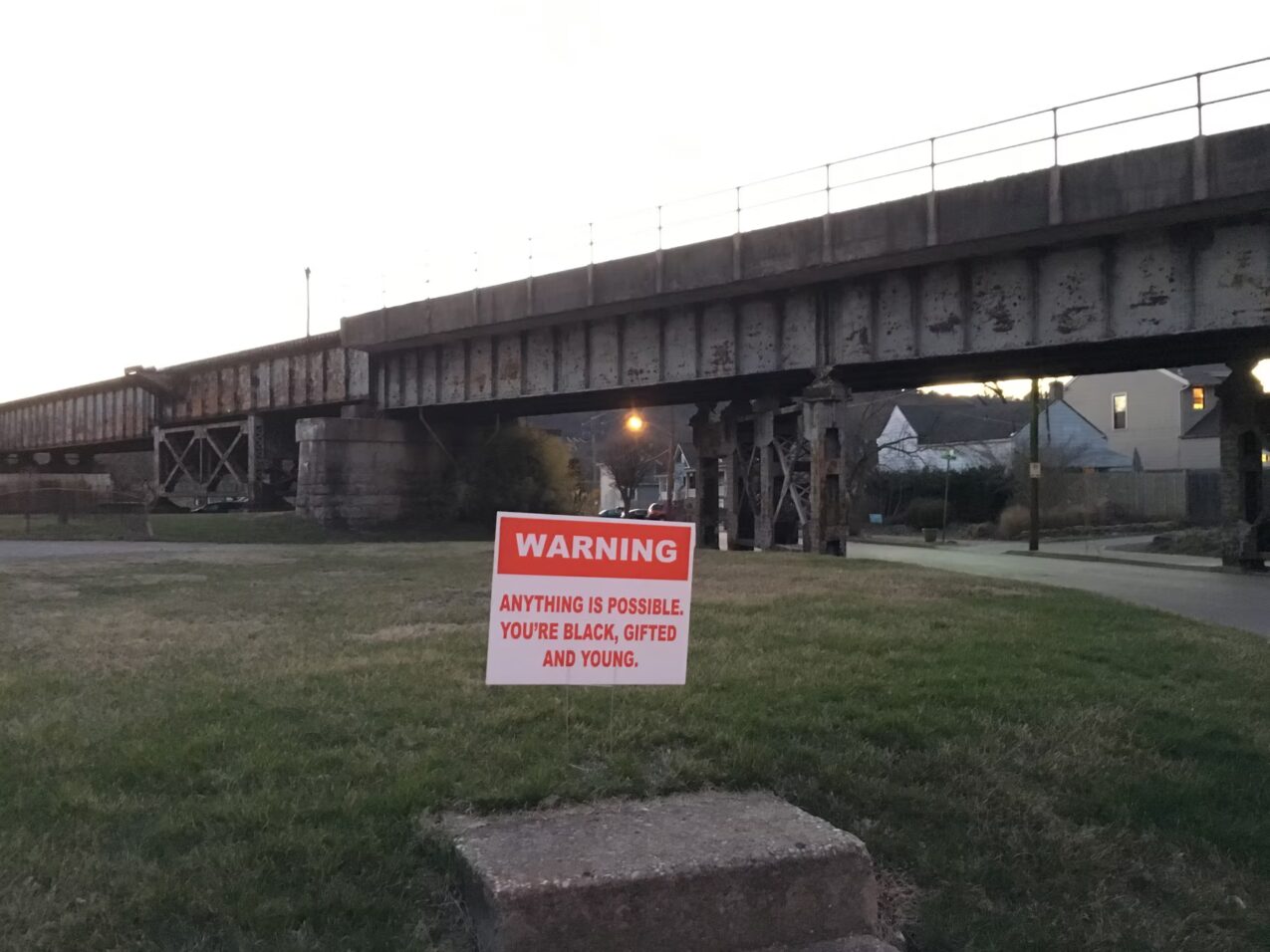
Love Letter Yard Signs
When one sees an open lot, one typically thinks and associates the surroundings with blight, crime, poverty and race. Empty lots are found only in “certain” neighborhoods. Open lots are emblematic of the failings of a neighborhood: the lack of education, employment, resources, economic opportunities, strong bonds, etc. Yet, that is the direct opposite of the idea and images we associate with the word, open, or the notion of openness. We envision being free, possibility, accessibility and, for some, abundance. All the things never considered while viewing an open lot; the focus lies solely on loss and less than. But this is not what I think of when I views these spaces in my childhood neighborhood; I cannot.
There is power in place. People subconsciously link their identity and value to the places they inhabit and frequent. To leave one’s home to be greeted with an open lot, I believe has psychological effects. My aim with the love letter yard signs is to challenge and, hopefully, rewrite the narrative my community has with these spaces and ultimately, themselves. To view these spaces as the beginning of whatever they deem necessary to live the lives they want to live. Toward that end, I took lyrics from neo-soul songs which heralds all things Black love. I interjected those lyrics into signage we commonly see in our neighborhood spaces. These signs were then physically placed in the many open lots found in my childhood neighborhood.
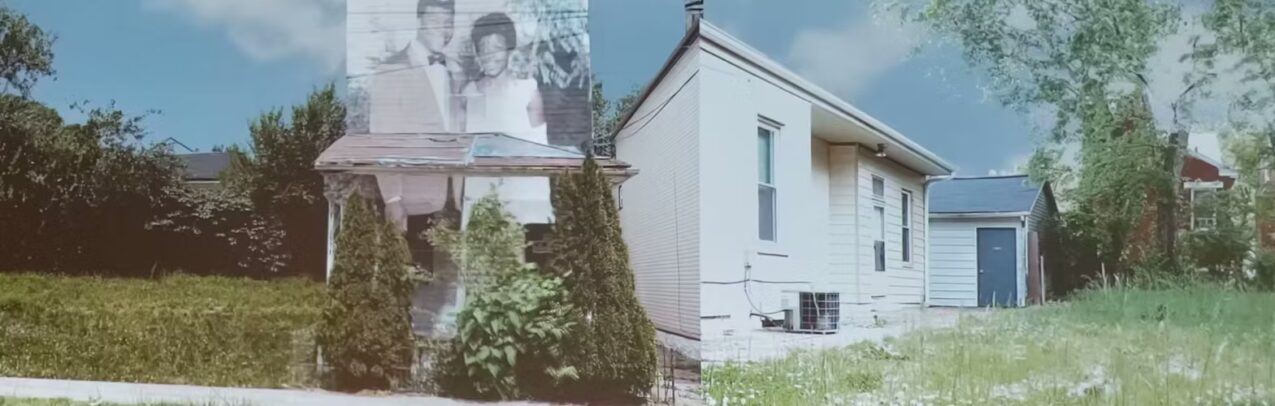
Pleasant Street Series II
Pleasant Street is the actual name of the street of one of my childhood homes in the Eastside neighborhood of Covington, KY. Naming the series pleasant street is a form of satire. As very little was pleasant about my neighborhood upon my return home after leaving a decade or so prior. I came home to abandoned or uninhabitable houses or empty lots. This doesn’t even account for the families no longer in the communities who had been there for generations.
My work is one story of a family and the neighborhood where the family lived. It is a deep want of one for another to move in self-love. It is a movement through time while looking back, standing still, and dreaming about years and generations ahead. It is about how space/place is a literal shape that holds the weight of our identities and histories and impacts life paths.